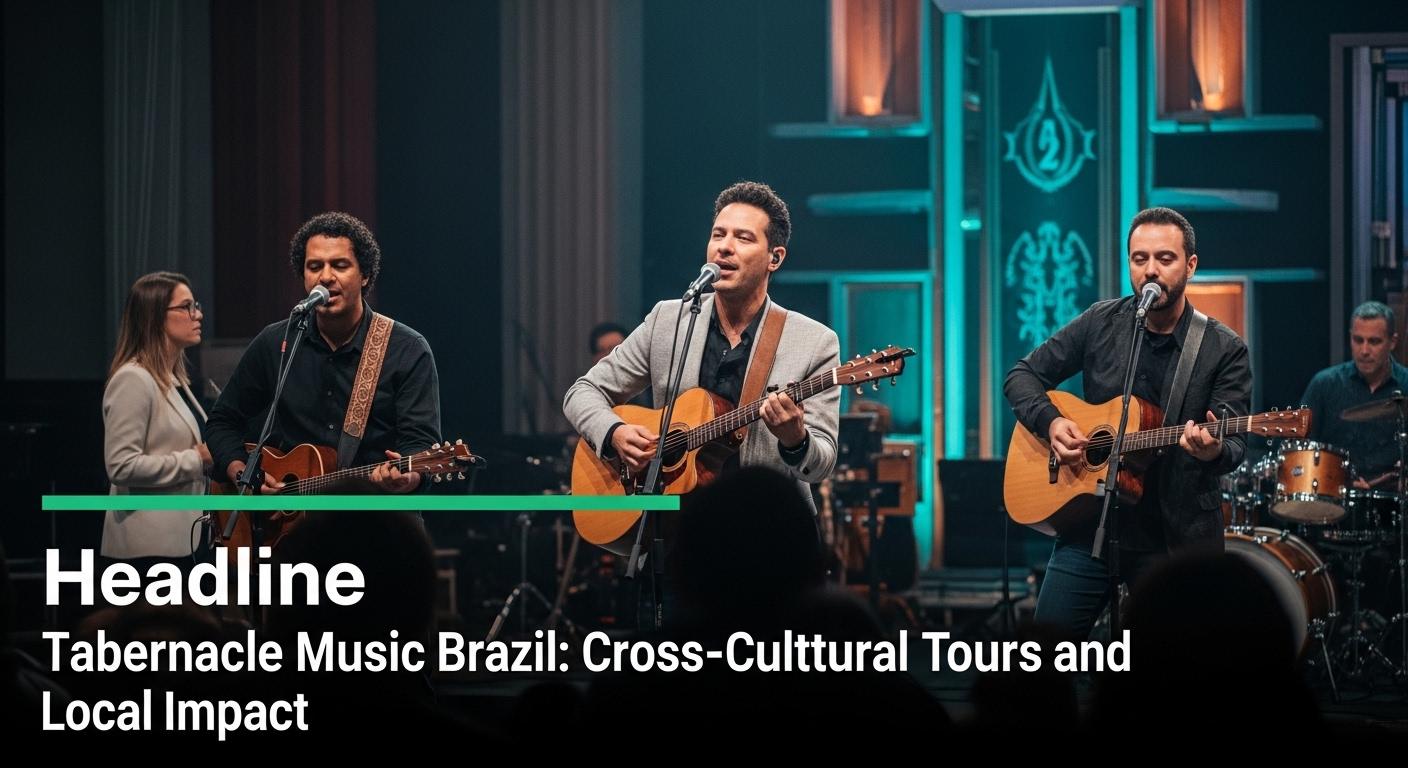
Choral ensemble performing in Brazil during an international concert tour
Updated: April 15, 2026
In the Brazilian music landscape, the phrase brazilian Music Brazil functions less as a slogan and more as a diagnostic tool for understanding how global streaming, domestic festival circuits, and local communities intersect. This analysis examines the current dynamics shaping artists, venues, and policy, offering scenarios for the year ahead that are both pragmatic and deeply contextual.
Rethinking the Ecosystem: Streaming, Venues, and Touring
The contemporary Brazilian music ecosystem blends digital discovery with live convergence. Streaming platforms remain the dominant entry point for new listeners, while the live concert—whether in a packed arena or a neighborhood club—remains the most tangible expression of artistic authority and financial viability. For many artists, the playbook has shifted toward releasing a steady cadence of digital content that keeps fans engaged between high-profile performances. Those songs then migrate to festival bills and touring routes that thread major urban hubs with regional centers where audiences crave authentic experiences rooted in local rhythms.
Promoters and venues are recalibrating expectations as hybrid formats prove resilient. Multi-artist bills, curated showcases, and intimate residencies offer predictable paths to audience growth, while also enabling artists to test material in shorter formats before committing to longer tours. The result is a more iterative model: a song is released, feedback is gathered from streams and social chatter, a live date refines arrangements, and a new digital single capitalizes on momentum. Yet the economics remain contingent on transparent revenue sharing between platforms, venues, and artists, as well as on the ability of acts to convert live interest into durable fan relationships that sustain touring across the year rather than a single peak season.
Regional Voices and Cross-genre Catalysts
Brazil’s musical fabric is intensely regional, with distinct sounds evolving in parallel across cities and countryside. In Recife, forró and regional rhythms mingle with contemporary pop, while in São Paulo, rap-influenced Brazilian rhythms collide with samba, funk, and indie sensibilities. The cross-pollination across genres is accelerating, producing acts that can navigate samba schools, baile funk, sertanejo universitário, and more experimental pop without losing audience relevance. This regional diversity is not mere color; it’s the engine of mass appeal and export potential. When artists consciously blend regional authenticity with polished studio craft, they unlock new networks—diaspora communities, European festivals, and Latin American circuits—that amplify the reach of Brazilian music beyond traditional export routes.
Collaborations across genres are increasingly strategic. Partnerships between traditional roots musicians and urban performers create hybrid sounds that travel well in streaming playlists and live festival lineups alike. The byproducts are broader fan demographics, deeper live audiences, and a more resilient pipeline for developing talent from the ground up. For the industry, the challenge is to sustain this momentum while protecting the local textures that give Brazilian music its particular identity, rather than pushing toward a homogenized sound that travels easily but lacks texture.
Policy, Funding, and the Export Equation
Public policy and cultural funding influence the scale at which Brazilian music can grow from the neighborhood stage to international stages. Municipal and national programs that support touring subsidies, recording projects, and cultural exchanges can reduce the risk of international expansion for independent artists and small labels. The export equation is not simply about foreign performance fees; it hinges on developing a coherent ecosystem that sustains creation at home while enabling global promotion through curated showcases, co-productions, and strategic partnerships with international festivals.
Critically, the export pathway benefits from a transparent infrastructure for rights management, licensing, and revenue sharing across borders. When artists can rely on predictable and fair compensation for streaming, synchronization, and live engagements, they are more willing to invest in larger, long-term projects. In this context, policy alignment with industry agreements—balancing fair platform compensation with artist empowerment—becomes a practical lever for scaling Brazilian music internationally while preserving the domestic vitality that fuels it.
Digital Strategies for Emerging Artists
For emerging acts, digital strategy is less about chasing a single viral hit and more about constructing durable engagement. Direct-to-fan channels, merchandising, and paid live streams provide alternative revenue streams that can stand alongside traditional album sales and publishing income. Analytics from streaming and social media offer actionable insight into audience preferences, enabling artists to tailor material, schedule releases, and optimize tour routing. The most successful acts cultivate a narrative around regional roots, personal storytelling, and collaborative versatility—qualities that translate into repeat listening, ticket sales, and cross-market reach.
Labels and managers are recalibrating their roles in this environment. Rather than acting as gatekeepers who control access to broadcast platforms, they increasingly function as enablers—helping artists navigate digital ecosystems, protect rights, and identify cross-genre opportunities that align with the artist’s long-term vision. In practical terms, this means deliberate investment in production quality, a consistent content cadence, and partnerships with brands and cultural institutions that can extend a touring circuit beyond traditional centers.
Actionable Takeaways
- Invest in cross-genre collaborations that honor regional roots while expanding accessibility on streaming playlists and festival bills.
- Develop regional touring hubs that connect major cities with smaller locales through affordable, scalable itineraries and resilient partnerships with local venues.
- Align with transparent revenue-sharing models across platforms, venues, and promoters to sustain artist viability in a streaming-first economy.
- Leverage data-driven insights to shape release schedules, live formats, and audience targeting, balancing rapid content with sustainable growth.
- Engage with policy and funding programs that support touring, recording, and export initiatives to maximize long-term cultural impact.
Source Context
For context, see the following recent items: