brazilian Music Brazil stands at a turning point as audiences, venues, and platforms recalibrate their expectations of live sound, cross-cultural exchange, and the economics of fame. In São Paulo, a city that doubles as a cultural magnet for performers from across the globe, recent moments of collaboration signal how the ecosystem is evolving beyond traditional genre boundaries.
São Paulo as a crossroads for international collaborations
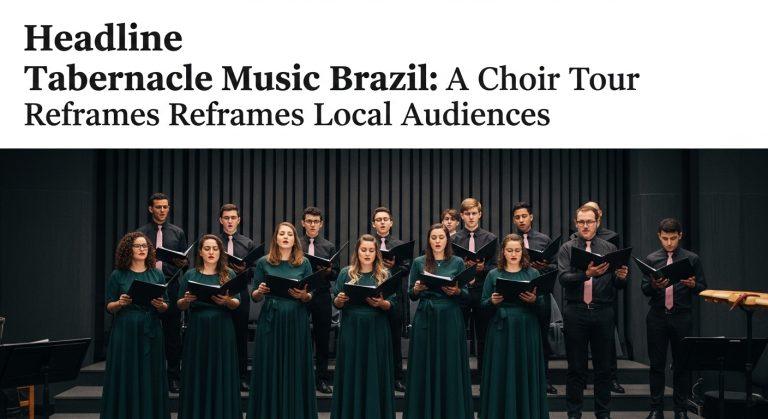
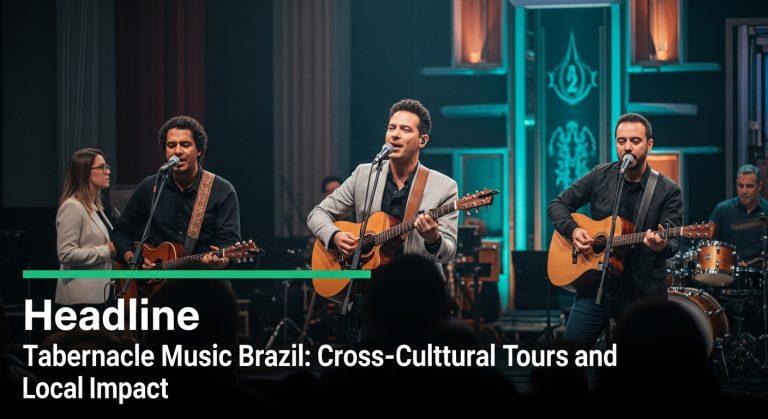
In a city known for its vibrant concert calendar, cross-border projects are no longer novelties but expected patterns. When a Brazilian icon was welcomed as a surprise guest at a tour stop featuring a world-class choir, it became a case study in how Brazilian rhythms intersect with sacred and classical repertoire. Such moments are symptomatic of a broader trend: transnational ensembles seeking Brazilian musicians and rhythms to refresh classical and choral forms, while Brazilian artists leverage global platforms to reach new audiences. The city serves as a laboratory where arrangements, repertoire, and stagecraft are negotiated in real time, with audiences responding through attendance, social media, and streaming behavior that tracks every twist in the collaboration arc.
Guest appearances and audience dynamics
When artists cross into unfamiliar musical territory, audience expectations shift. Veterans of samba and MPB encounter gospel harmonies, orchestral timbres, and electronic textures; fans of the choir are exposed to Brazilian percussion patterns and call-and-response phrasing. The interaction creates new listening paths, which streaming platforms tend to amplify by recommending adjacent sounds and artists across continents. In practical terms, these moments expand marketability for participants, raising the potential for cross-genre work to become sustainable revenue streams rather than festival quirks. It is also a test of how media narratives frame Brazilian music—will a performance labeled as fusion be perceived as a dilution or as expansion of Brazilian identity? The answer, increasingly, hinges on the quality of arrangement, the integrity of the performance, and the clarity of storytelling in concert notes and media coverage.
Industrial dynamics and policy context
The live-music economy in Brazil is shaped by a mix of municipal support, private sponsorship, and cultural incentives, all of which influence which collaborations get staged and for how long. São Paulo, as Brazil’s largest cultural market, bears disproportionate weight in determining which cross-genre experiments reach national visibility. Producers weigh factors such as rehearsal time, cross‑discipline logistics, and audience development goals against the cost of mounting large-scale collaborations. Meanwhile, the streaming era reshapes how success is measured after a concert—views, shares, and playlist placements can translate into touring demand far beyond local markets. This dynamic creates both opportunities and pressures: opportunities to build durable careers through durable relationships with international partners, and pressures to deliver high-quality, well-supported projects that justify investment and gatekeeping. For policymakers and funders, the challenge is to sustain exploratory projects while protecting the cultural identity embedded in Brazilian music traditions.
Future scenarios: technology, education, and grassroots growth
Technology offers new modalities for collaboration that can lower the barriers to cross-genre experiments. Remote recording, hybrid performances, and modular orchestration allow a Brazilian artist to test ideas with an international choir without the logistical overhead of a full tour. Educational programs that pair early-career musicians with seasoned collaborators in masterclasses and residency formats are building a pipeline of performers who can navigate both traditional samba sensibilities and contemporary global sounds. At the grassroots level, independent venues, cooperatives, and collectives continue to push a more diverse set of voices into public visibility, gradually shifting the national conversation away from a handful of superstars toward a more plural ecosystem. If current trends hold, the next wave of Brazilian music may be defined less by the size of a single hit and more by the durability of cross-genre networks that connect regional styles to global audiences.
Actionable Takeaways
- Artists: pursue deliberate cross-genre collaborations with clear artistic goals and audience-facing narratives that preserve Brazilian identity.
- Venues and promoters: invest in modular, scalable formats that enable high-quality hybrid performances without prohibitive costs.
- Managers and labels: track streaming and social metrics to identify fertile cracks where Brazilian music resonates beyond local scenes.
- Policy makers and funders: support long-term collaboration pipelines, including residencies and exchange programs that pair Brazilian musicians with international artists.