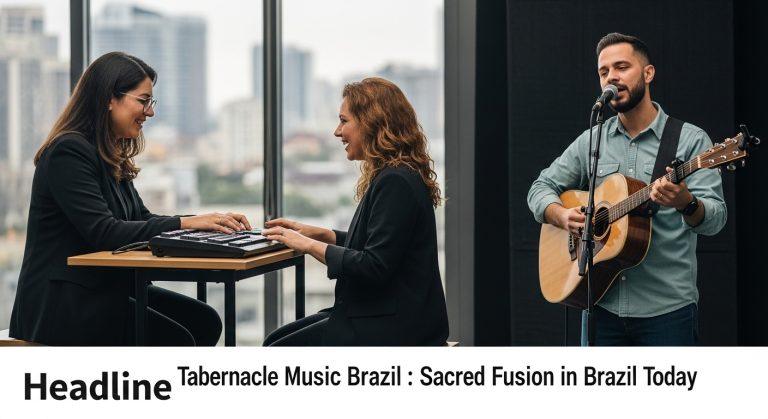
In Brazil’s cultural landscape, hope Music Brazil functions as more than a slogan; it is a lens for understanding how artists, venues, audiences, and platforms navigate an evolving soundscape across a vast nation.
Brazil’s Music Ecosystem: Context and Crescendo
Brazil’s musical ecosystem is a mosaic of genres, languages, and circuits—from traditional roots in regional communities to the high-energy pulse of contemporary urban scenes. Festivals in São Paulo and Salvador, intimate showcases in Belo Horizonte, and streaming-driven visibility for independent acts collectively shape a dynamic environment where new voices emerge and scale. The concept of hope in this context is not merely inspirational; it is instrumental. When audiences discover a locally produced track on a playlist, a small venue hosts a debut performance, or a regional radio station spotlights a fresh fusion, hope becomes a catalyst that translates into sustained practice—artists refining technique, promoters taking calculated risks, and listeners investing time and money into discovery.
This dynamic has intensified as digital platforms broaden access to both global trends and homegrown experiments. Brazilian producers remix global sounds into signatures that are unmistakably local, while musicians collaborate across genres—from música popular brasileira to hip hop and contemporary electronic music—creating scenes that feel both rooted and borderless. The result is a music culture that can pivot quickly in response to shifting economics, audience expectations, and technological tools, all while maintaining a recognizable Brazilian voice. The practical upshot: more cross-pollination, more opportunities for emerging artists, and a cultural resilience that translates into lasting communities of practice.
Momentum and Margins: The Artists and Audiences
Artist-facing momentum—live performances, studio collaborations, and touring itineraries—often mirrors audience growth, but the margins tell a more nuanced story. Mid-sized venues remain essential laboratories for experimentation, yet they face pressures from rising production costs, venue licensing complexities, and competition for scarce sponsorship dollars. In parallel, a rising cohort of independent labels and collectives leverages social media and short-form video to build local followings that can translate into national attention. For audiences, the return of live shows after disruptions has deepened a sense of communal belonging; fans increasingly participate as curators, supporters, and co-creators, rather than passive listeners. This shift expands the potential for sustainable careers but also heightens the need for transparent revenue models, fair compensation, and clear ownership structures that protect artists’ creative rights.
The interplay between artists and audiences is not merely transactional. It shapes taste, vocabulary, and expectation—what counts as innovative, what constitutes a breakthrough, and which stories are elevated to broader platforms. In this sense, hope is pragmatic: it emerges when communities can translate interest into enduring opportunities—whether through festival lineups that give emerging acts exposure, producer collaborations that refine a sound, or streaming playlists that calibrate a region’s reach. The trend line suggests continued diversification of genres and a broader acceptance of regional voices, even as global algorithms compress discovery into shorter, repeatable cycles that demand constant adaptation from creators.
Economic and Policy Threads: Funding, Tax Incentives, and Public Faith
Economic factors and public policy threads exert a powerful influence on Brazil’s music scene. Public funding, private sponsorship, and tax-incentive programs play crucial roles in sustaining venues, festivals, and artist development. Policy remains a lever for widening access to cultural production, but funding cycles can be uneven, and administrative hurdles can deter smaller projects from applying for support. In this context, hope Music Brazil grows when policymakers align incentives with on-the-ground realities—streamlining grant processes, ensuring timely disbursements, and creating pathways for community-led initiatives that amplify marginalized voices. Beyond money, policy choices shape the infrastructure of opportunity: rights management, venue accessibility, and local content requirements can either empower aspiring musicians or keep certain scenes on the periphery.
Market dynamics also matter. Streaming platforms, while globally integrated, adjust to local demand and regulatory environments. The Brazilian music industry benefits when platform partnerships support discovery of regional styles and when data transparency helps artists understand listener behavior. Meanwhile, industry players—labels, distributors, and independent collectives—face the task of balancing profitability with artistic risk. The practical implication is clear: if the system can connect potential talent with resources sooner, the result is a more robust ecosystem capable of sustaining long-term creative work and reducing revenue volatility for musicians and venues alike.
Paths Forward: Policy Tools, Platform Partnerships, and Community Resilience
Looking ahead, a triad of actions could strengthen hope Music Brazil as a durable force in the cultural economy. First, targeted funding models that prioritize small venues, regional showcases, and artist-to-artist collaboration can lower barriers to entry and nurture enduring networks. Second, platform partners should co-create equitable revenue-sharing arrangements with collectives and independent artists, prioritizing transparency, metadata accuracy, and fair compensation for performances and streams. Third, communities themselves must codify inclusive practices—curating programming that reflects Brazil’s regional diversity, investing in rehearsal and recording infrastructure, and fostering mentorship pipelines for emerging creators. By weaving policy design, platform collaboration, and grassroots empowerment, Brazil can sustain a music ecosystem that not only entertains but also elevates social connection, local identity, and economic stability.
The scenario is not utopian but plausible: a network of locally anchored venues that feed into national festivals, supported by streamlined funding channels and responsible platform partnerships. In this future, hope Music Brazil is less a motto and more a measurable outcome—a set of durable mechanisms that translate cultural capital into tangible opportunities for artists and communities across the country.
Actionable Takeaways
- Policymakers: simplify access to cultural grants for small venues and regional festivals; create bundled funding for artist development, touring, and studio time.
- Industry: invest in regional studios and co-working spaces; develop fair revenue models with transparent reporting for independent artists.
- Venues: implement inclusive pricing and community outreach programs to broaden audiences and reduce barriers to entry for first-time concertgoers.
- Artists and collectives: form mentorship networks that pair emerging musicians with seasoned professionals; prioritize cross-genre collaborations to expand reach.
- Audiences: engage with local scenes by attending shows beyond major cities; support artist-led initiatives and small venues through memberships and crowd-funding campaigns.