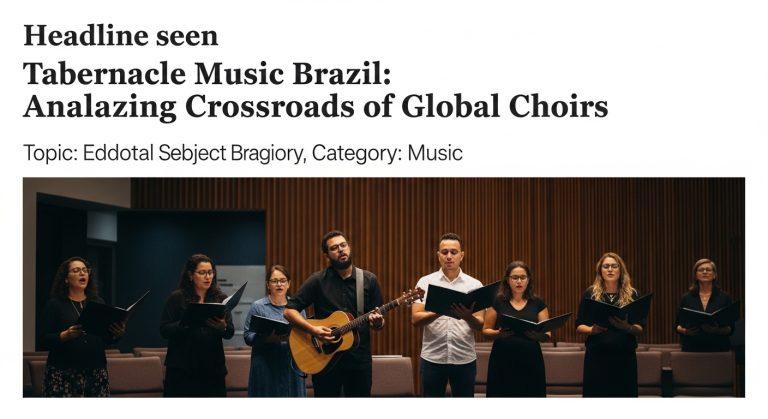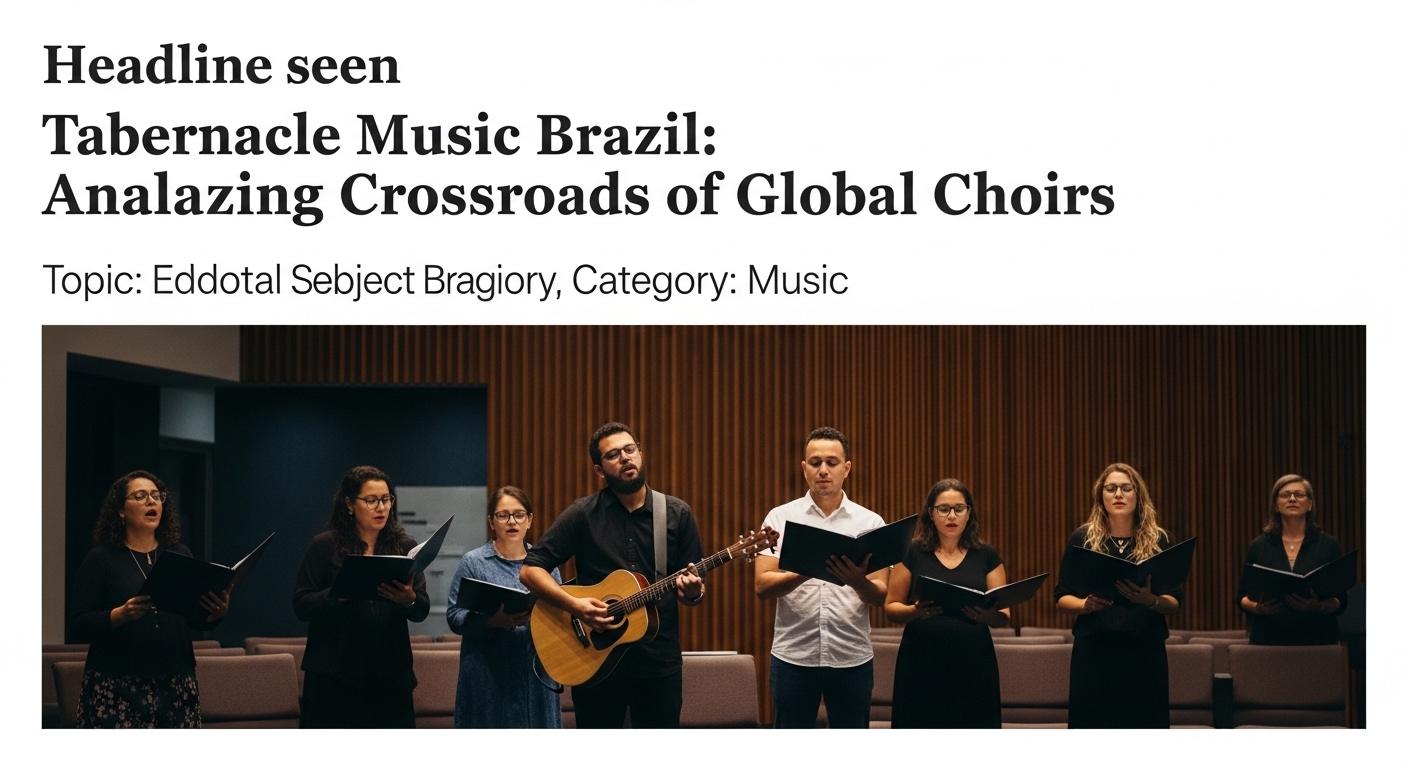
This piece begins with a clear aim: to offer a review Music Brazil that goes beyond headlines about awards and streams to map how artists navigate streaming, live circuits, and hybrid genres across the country.
Context: Brazil’s Music Landscape in Flux
Brazil’s music ecosystem is not a single scene but a constellation of regional styles, platforms, and circuits that together determine reach and sustainability for artists. In recent years, streaming platforms have expanded access while live venues have rebounded from disruptions, allowing acts from samba-punk to trap-funk to cross regional borders. The Brazilian market remains deeply local in its listening rituals—families gathering around radios and smartphones, curators mixing national stars with international acts—and increasingly global in its collaborations. The result is a paradox: artists can reach global audiences, yet the core of practice remains rooted in local spaces, language, and festival calendars.
For a country with diverse languages, rhythms, and political shifts, the music economy hinges on how much value gets captured by creators, labels, and venues. Accessibility to both streaming revenue and live gate receipts shapes decisions around touring, recording, and even genre experimentation. A robust live circuit still acts as the primary venue for visibility and relationship-building with fans, while streaming shapes the tempo and geography of discovery. This tension—between scarcity in certain venues and abundance online—drives a lot of the recent genre hybridity and audience mobilization.
The Power of Live Circuits and Streaming
Live shows in Brazilian cities have become increasingly networked— festivals linking regional stages to national headliners, clubs feeding into streaming archives, and multi-city tours creating a rhythm that keeps audiences engaged over months rather than weeks. The industry question is how to balance high-production concerts with scalable, lower-cost performances that reach underserved communities. Streaming platforms, for their part, reward playlisting and data-driven discovery, yet often favor a few dominant acts. The challenge for policymakers and industry players is to translate stream counts into sustainable income for middle-tier artists who are essential to the ecosystem’s health. When venues invest in technical capacity, and when labels commit to regional acts, the ecosystem becomes more resilient, enabling artists to experiment without sacrificing livelihood.
In this context, the role of Latinidad—the shared cultural lineage connecting Brazilian musicians with Latin American audiences—becomes both market driver and cultural bridge. Artists who blend Portuguese lyrics with global pop, hip-hop, or rock idioms tend to perform better on streaming playlists while also drawing international collaborations. That dynamic pushes a broader question: what counts as national identity in a era where borders matter less than the flows of music, fashion, and media? The review Music Brazil perspective sees this not as dilution but as a rearticulation of cultural capital, where local tradition and global appetite feed each other in a continuous loop.
Genre Hybrids, Youth, and the Audience
Younger listeners are the fulcrum of Brazil’s hybrid sounds. Rap fused with samba or funk melodies, indie rock with Brazilian percussion, and pop confections built on tropicalia-tinged chords are not anomalies but the norm in playlists and live sets. This hybridity speaks to a broader trend: audiences increasingly demand authenticity delivered through experimentation rather than adherence to a single genre. In practical terms, artists are responding by releasing multi-genre mixtapes, collaborating across labels, and designing live moments that blend dancefloor energy with intimate storytelling. The result is a listening culture that rewards versatility, quick turnarounds, and cross-cultural collaborations that still feel unmistakably Brazilian in cadence and phrasing.
Retail models—from vinyl reissues to limited-edition cassettes—also reflect a hybrid economy: fans purchase tangible artifacts while streaming provides the scale for discovery. For industry observers, the key question is how to monetize this hybridity without eroding artistic freedom. The deeper implication is that a successful Brazilian act may no longer rely on a single style but on a portfolio approach—one that builds a core audience through local venues and sustains it through international collaborations and streaming visibility.
Actionable Takeaways
- Artists: diversify release strategies across platforms, live formats, and regional markets to maximize income streams and fan engagement.
- Promoters and venues: invest in modular staging and inclusive programming that can scale from intimate gigs to large festivals while preserving accessibility.
- Labels and managers: cultivate cross-genre collaborations that connect Brazilian traditions with global sounds, expanding playlist and festival opportunities.
- Policy and funding bodies: support data-driven artist development, touring subsidies, and local language content that sustains the grassroots ecosystem.
Source Context
For background on the evolving Brazilian live and streaming landscape, reviewed sources illustrate how Latinidad, genre blending, and audience shifts are shaping contemporary music practice.