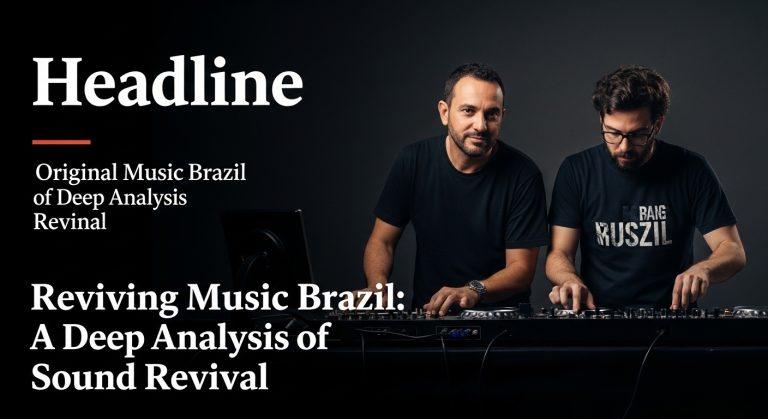
Reviving Music Brazil is more than a slogan; it is a diagnostic frame for a country where regional sounds, street culture, and formal institutions collide in a crowded cultural economy. This analysis maps how collaborations across scenes, new audiences formed through digital platforms, and pragmatic policy choices intersect to redefine Brazil’s sonic landscape.
A moment of renewal: reviving Music Brazil through collaboration
Across Brazil’s diverse creative spaces, mutual-aid networks and artist collectives are surfacing as a structural response to fragmentation. Groups share gear, pool resources, and organize cross-city tours that link samba escolas, baile funk crews, forro circles, and MPB renegades. The logic is not charity; it is economy of scale in which shared rehearsal spaces, portable studios, and co-production models reduce risk while expanding creative latitude. When a festival program couples two or three scenes that rarely appear on the same poster, it does more than entertain; it changes career trajectories by expanding audiences to embrace experimentation and community values.
These collaborations are also a social contract. They embed mentorship, accessibility, and mutual aid into the workflow, creating laddered opportunities for up-and-coming artists from marginalized regions to gain visibility. In practical terms, this means more itinerant shows, more community radio partnerships, and more local language content in a landscape often dominated by national stars. The result is a more plural and resilient music ecology, where the act of creating becomes a form of service to communities that sustain artists in the long run.
Institutional pillars: labels, venues, and funding
Independent labels have become the accelerants of renewal by enabling niche fusions to reach listeners through streaming and live networks. In these spaces, entrepreneurial authorship is paired with archival instincts: reissuing older recordings, archiving regional styles, and curating compilations that foreground local scenes. These labels also help defy the volatility of mass-market consumption by building durable relationships with audiences, venues, and educators.
Venues play a central role beyond commerce: they are conveners of culture, training grounds for artists, and catalysts for nearby economies. The survival and vitality of small clubs, social centers, and cultural houses depend on predictable scheduling, fair compensation, and community ownership models that let spaces weather shifts in taste or policy. Public and private funding streams, when applied with transparency, can help protect this infrastructure. In practice, that means simplified grant processes, longer grant cycles, and clear reporting that respects the realities of independent artists who balance multiple gigs and responsibilities.
Audience, identity, and digital turn: building native ecosystems
Brazilian audiences increasingly discover music through digital platforms that reward local language content and regional storytelling. Discovery habits now hinge on playlists, algorithmic recommendations, and community-curated channels that surface artists who live and work outside major capitals. The digital turn does not erase place; it makes place more legible across the country and to Brazilian audiences abroad. When a Nordeste duo enlists a paulista producer for a track, the result can travel in ways that blend urban nerves with rural sensibilities, expanding the meaning of Brazilian identity in popular music.
Yet digital ecosystems require careful stewardship. Metadata accuracy, rights management, and fair revenue sharing remain ongoing issues. Platforms that invest in regional metadata tagging, local-language support, and region-specific promotion help ensure that new artists reach the audiences that care about authenticity, while also enabling festivals and venues to program more diverse lineups without sacrificing financial viability.
Policy signals and practical steps for stakeholders
Policy signals matter because they shape the pace at which renewal can scale. Small grants for collaborative projects, tax-incentive programs that benefit independent labels, and transparent funding dashboards can align public support with on-the-ground needs. For artists, managers, and collectives, the priority is to build sustainable pipelines that connect creation, distribution, and performance while preserving artistic freedom.
Practical steps include establishing regional hubs that coordinate touring routes, mentoring networks that pair veteran musicians with emerging artists, and co-working spaces that function as both creative studios and community centers. Educational institutions could formalize partnerships with local venues, giving students hands-on experience in event management, sound engineering, and cultural programming. Finally, industry associations should publish annual, auditable impact reports to demonstrate how funds translate into audience growth, skill development, and cultural preservation.
Actionable Takeaways
- Invest in cross-scene collaborations that connect traditional and contemporary forms to broaden audience reach.
- Strengthen the ecosystem by supporting grassroots venues, touring circuits, and fair compensation practices.
- Encourage streaming platforms to elevate Brazilian language content and regional artists through curated playlists and local partnerships.
- Increase transparent cultural funding with longer cycles and clear evaluation metrics for independent initiatives.
- Build data-informed audience development programs that respect regional diversity and provide measurable engagement.
- Foster partnerships among artists, educators, and local governments to sustain talent pipelines and community impact.