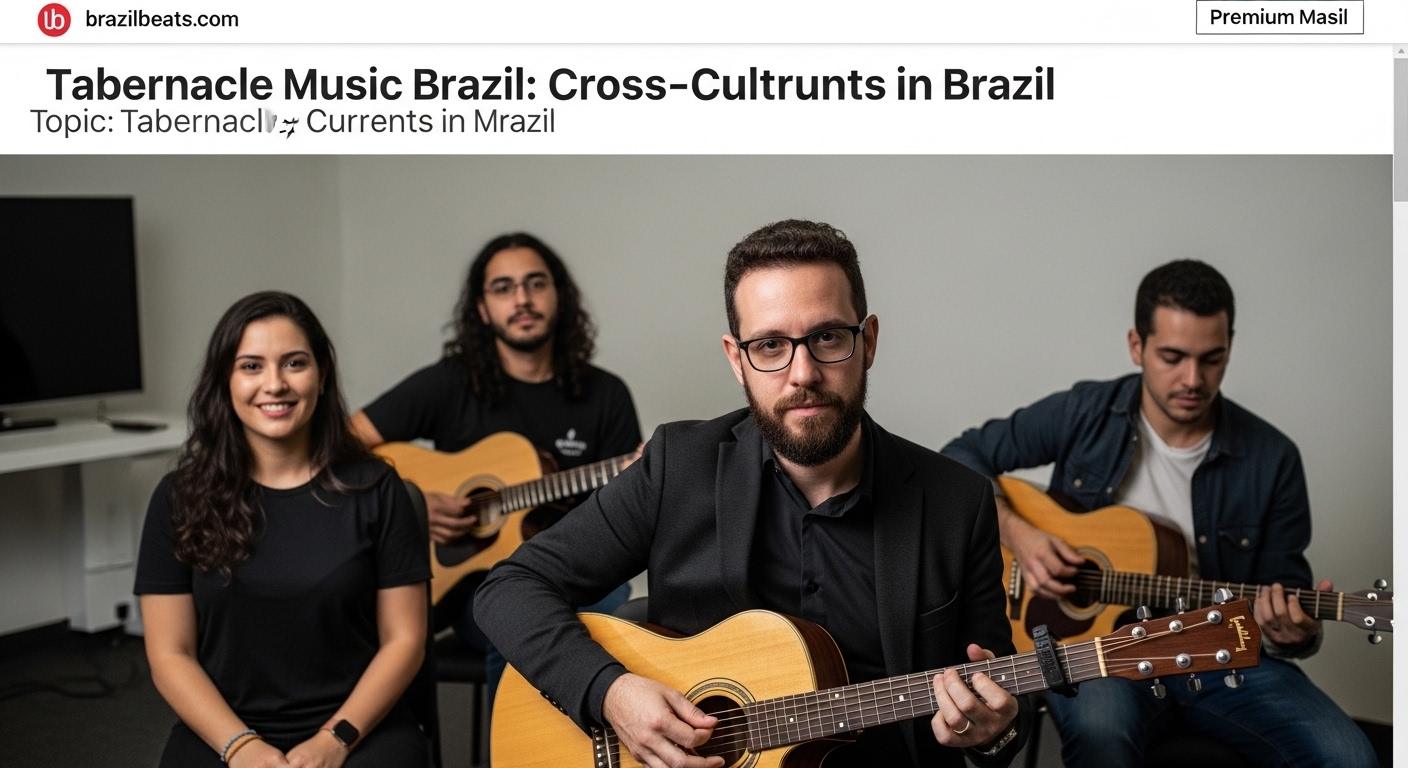
Tabernacle Choir performing on stage in Brazil, blending choral tradition with Brazilian musical elements.
Updated: April 12, 2026
In Brazil, tabernacle Music Brazil is emerging as a lens through which audiences reimagine traditional choral repertoires in the age of global tours. As ensembles like the Tabernacle Choir and Orchestra bring songs of hope to Brazilian stages, observers see more than concerts; they see a cultural dialogue that crosses language, genre, and industry boundaries.
Context and Cultural Currents
Brazil has a deep, layered relationship with choral and sacred music, cultivated by long-standing religious communities, school choirs, and festival traditions. When a globally renowned ensemble enters a Brazilian market, the encounter is not merely entertainment; it becomes a test case for how transnational repertoires travel, adapt, and resonate with local sensibilities. The Tabernacle Choir’s presence—highlighted by a formal-focused program and orchestral backing—offers Brazilian listeners a rare convergence: the polish of a long-established Western sacred tradition meeting a dynamic, diverse urban audience hungry for new sonic textures. In this context, tabernacle Music Brazil functions as a banner under which mutual cultural curiosity can flourish, inviting Brazilian choirs, gospel acts, and community ensembles to compare rehearsal practices, vocal technique, and the conceptual framing of hope in performance. The challenge for local audiences is not simply familiarity; it is interpretation—how a repertoire rooted in a particular religious and historical context can find new meanings amid Brazil’s plural musical landscape.
Beyond sacred space, Brazilian audiences bring a robust appetite for rhythm and improvisation. The cross-pollination on a concert bill—where choral blend interacts with orchestral color and, potentially, light touches of Brazilian timbres—becomes a living laboratory. In practical terms, this means local musicians and audiences are observing arrangements, vocal blend, and stagecraft that originate far from their own training halls. The result is less about imitation and more about translation: how a mature, global choir can participate in a Brazilian musical conversation without dissolving its own identity.
Touring Dynamics and Local Economy
Tour logistics—venue selection, ticketing strategies, sponsorship models, and media partnerships—determine the scale and reach of any international concert. In Brazil, a touring ensemble of the Tabernacle Choir’s caliber signals more than prestige; it signals a potentially meaningful economic spark for cities hosting large venues. Local productions may hire additional stage crew, sound engineers, and translators, while hotels, restaurants, and transit services experience short, concentrated boosts around show dates. Yet for Brazilian organizers, the real value extends beyond the box office. The presence of a world-class choir can catalyze involvement from Brazilian choirs and schools, triggering exchange programs, masterclasses, or joint performances that leave a lasting imprint on the regional music ecosystem. In practical terms, the touring model becomes a test case for how to pair high-profile Western ensembles with Brazilian partners in a way that respects both artistic integrity and local benefits.
From a producer’s standpoint, the partnership model matters. If local partners chamber up with the touring outfit for rehearsals, sound checks, and educational outreach, the touring experience becomes more than a one-off event. It becomes a catalyst for professional development, enabling Brazilian technicians and musicians to calibrate to international standards while the visiting ensemble gains deeper exposure to Brazil’s diverse sonic environments. The potential ripple effects—new audiences, longer-term collaborations, and shared repertoires—could redefine how cross-border classical and gospel programming is conceived in Brazilian concert circuits.
Media Narratives and Audience Perception
Media framing matters as much as the music itself. Brazilian coverage tends to weigh the artistic quality of performances alongside questions of faith, cultural export, and the conditions under which international ensembles engage local communities. A well-balanced narrative highlights the artistic exchange: how directors and performers negotiate language barriers, how soloists adapt to Brazilian acoustics, and how audiences respond to the blending of choral sonorities with regional listening habits. Public reception in Brazil is rarely monolithic; it ranges from reverent, almost ceremonial appreciation in traditional church settings to energized, crossover listening in urban cultural centers. The risk for any such event is simplification: portraying a complex, multi-layered musical dialogue as a straightforward gesture of cultural diplomacy. A nuanced newsroom approach, therefore, should foreground voices from Brazilian musicians, organizers, and audience members who experience the concerts in real time, while also noting the logistical and spiritual dimensions of the project.
In this moment, tabernacle Music Brazil becomes a case study in how global ensembles negotiate prestige, accessibility, and local agency. The discourse around such tours can reveal broader questions about cultural ownership, representation, and the evolving definition of “gospel-inflected” or “sacred” performances in Brazilian popular culture. These conversations, when conducted with care and transparency, elevate the event from a mere tour stop to a meaningful cultural exchange that leaves both sides with updated vocabularies for collaboration.
Actionable Takeaways
- Foster formal partnerships between the touring ensemble and local Brazilian choirs to enable joint performances and shared learning experiences.
- Plan bilingual program notes and accessible on-site translation to ensure inclusivity for non-Portuguese-speaking audiences.
- Invest in local production crews and sound design to adapt the concert experience to Brazilian venues while preserving artistic intent.
- Partner with community and religious organizations for outreach that frames concerts as cultural education in addition to entertainment.
- Leverage social media and press to highlight cross-genre collaborations and the educational aspects of the tour, not only the spectacle.
Source Context