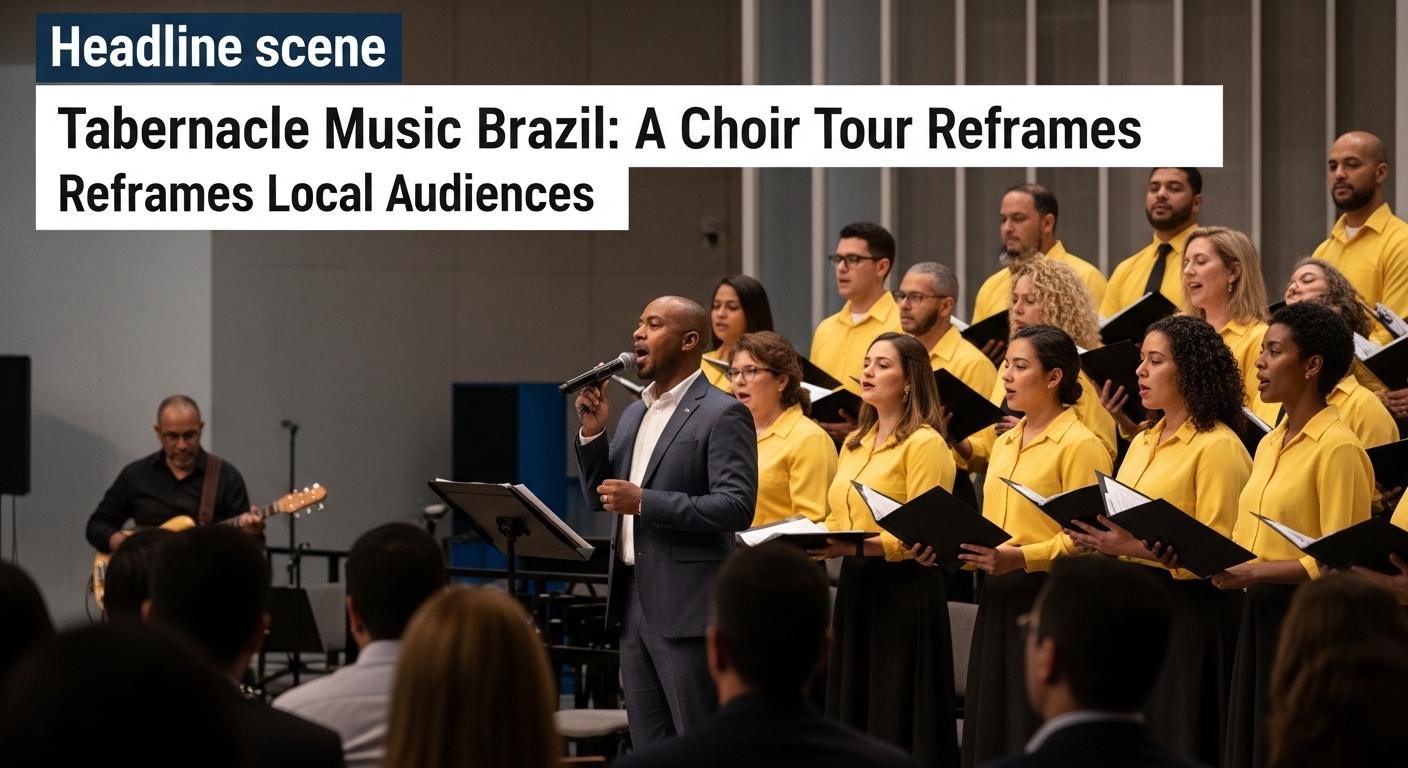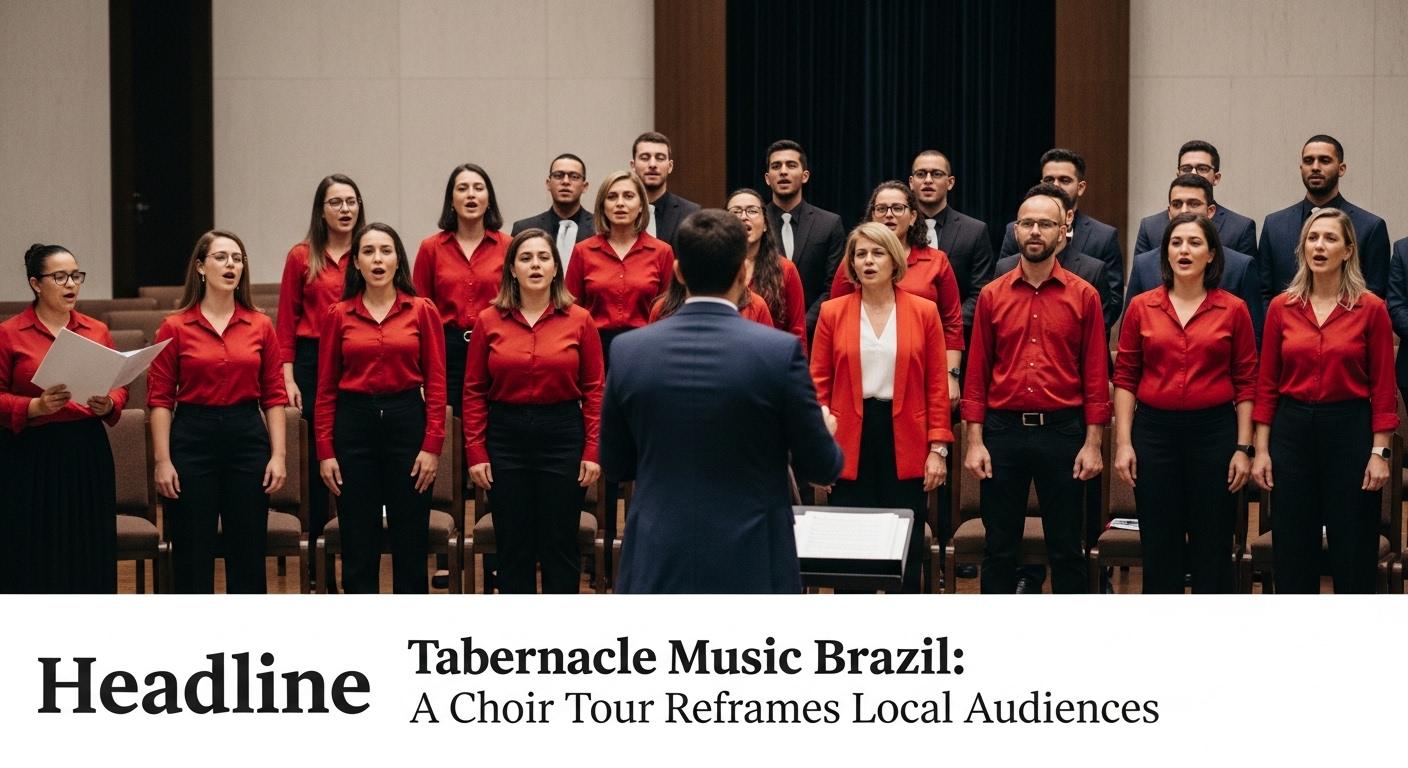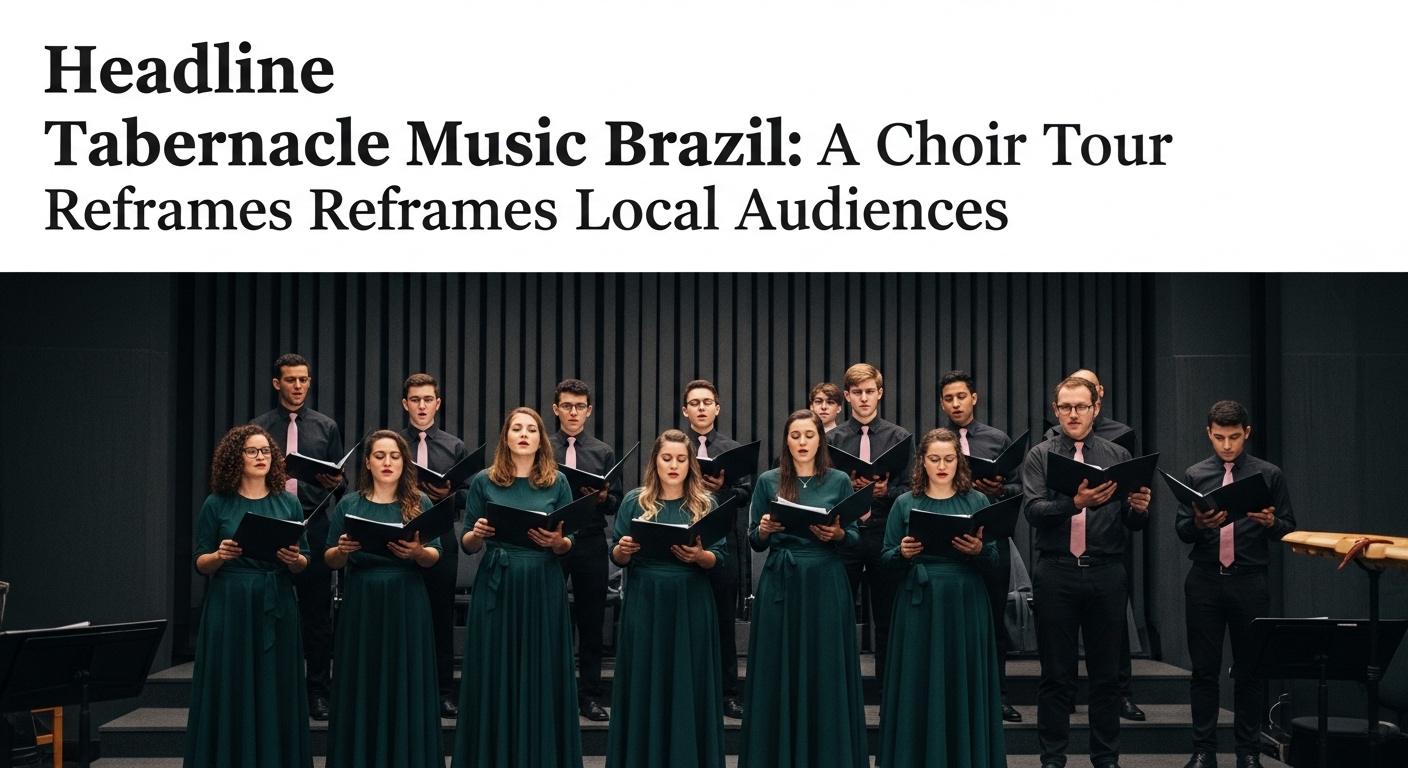
Concert scene featuring a choir and orchestra on a Brazilian stage during a touring program.
Updated: April 12, 2026
The phrase tabernacle Music Brazil has entered cultural conversations as a touring choral program navigates Brazil’s diverse music markets. As the Tabernacle Choir and Orchestra foregrounds ‘Songs of Hope’ in Brazil, local organizers, critics, and musicians ask how sacred repertoire travels, adapts, and lands with Brazilian audiences who bring their own rhythms, languages, and expectations. This moment isn’t simply about a visiting ensemble; it’s a test case for how transnational faith-based music negotiates celebrity, media, and the economics of live performance in a market that prizes both authenticity and spectacle. By tracing the tour’s logistical choices, audience reception, and media framing, we can sketch a deeper map of Tabernacle influence and how tabernacle Music Brazil might recode the relationship between church music and public concert culture in Brazil.
Context: Brazil’s evolving concert scene and the tabernacle aesthetic
Brazil’s live music ecosystem has become increasingly porous to transnational ensembles, with streaming and global partnerships expanding the reach of repertoire once confined to specific sacred spaces. The arrival of a tabernacle aesthetic—a choral-and-orchestral format with roots in sanctified tradition—offers a lens into how Brazil negotiates sacred music within public venues. The upcoming tour, anchored by a program marketed as Songs of Hope, functions as more than a concert itinerary; it is a field experiment in stagecraft, acoustics, and narrative framing. Organizers must translate a largely English-language repertoire into a Portuguese-speaking context, balancing reverence for liturgical cadence with the demands of contemporary Brazilian concert etiquette. In practice, this means calibrating choir dynamics for large halls, coordinating with local technicians, and crafting program notes and spoken commentary that resonate with Brazilian expectations for performance spontaneity, rapport with the audience, and cultural relevance. The broader implication is clear: when a visiting ensemble aligns with local media narratives and concert culture, it can redefine what counts as a legitimate, publicly accessible form of sacred music—and what counts as a successful cross-border collaboration.
Beyond venue and acoustics, the tour also reflects a strategic layering of identities. The tabernacle concept carries ecclesiastical resonance, while the public-facing concert leverages secular appeal through orchestral richness, cinematic pacing, and emotionally universal material. In this crossing, Brazilian promoters, radio and TV partners, and church-based networks become co-authors of the experience, shaping expectations about language, accessibility, and the aesthetics of reverence on stage. In short, the Brazil-engaged version of tabernacle Music Brazil is less a rigid import and more a negotiated blend—an evolving arrangement that tests the limits of tradition in a market that values musical diversity and crowd connectivity.
Audiences and expectations: how local listeners respond
Brazilian listeners arrive at such concerts with layered experiences of choral singing, gospel-adjacent styles, and MPB-inflected arrangements. Urban centers like São Paulo and Rio de Janeiro host diverse audiences who are comfortable with grand orchestral textures while also expecting intimate moments of vocal expression. The challenge for a touring tabernacle program is to honor the grandeur of its repertoire without alienating listeners who prioritize language clarity and narrative context. Translating program notes into Portuguese, offering bilingual introductions, and offering audience-friendly moments—such as a brief spoken piece about the music’s origins or a short collaborative number with a local choir—can transform a ceremonial event into a shared cultural moment. Social media and on-site engagement—short clips, behind-the-scenes content, and post-concert Q&As—further shape perception, turning a concert into a participatory experience rather than a one-way display. As these dynamics unfold, the tour risks achieving broad reach but varying degrees of emotional resonance, depending on how its sacred material is reframed for a Brazilian sensibility that values both devotion and communal vitality.
Local media play a pivotal role in this calibration. Coverage that situates the concert within Brazil’s ongoing conversations about religious expression, national identity, and artistic globalization can elevate perception from a mere touring act to a meaningful cultural exchange. Conversely, if the framing relies too heavily on liturgical form or external prestige, it may appear distant from everyday listening practice. The balance, then, is practical: cultivate a sense of shared experience, emphasize human stories within the music, and acknowledge Brazil’s own musical languages while presenting the choir’s repertoire with clarity and humility. The guest-artist and local-artist collaborations often become the hinge in this process, enabling a moment of cross-pollination that can amplify both the visiting ensemble’s reach and the Brazilian participants’ visibility.
Industry implications: logistics, media, and touring strategies
From a production standpoint, the tour is as much a logistical feat as a musical one. Coordinating travel to multiple cities, securing venues that can accommodate both choral and orchestral forces, and aligning schedules with local media cycles requires meticulous planning. Long-form narratives about the tour benefit from transparent communication about repertoire choices, language access, and the intention behind each stop. This is also a moment for the organizer to articulate a sustainable model of cross-cultural exchange: how to partner with Brazilian schools, churches, or cultural centers to foster educational outreach, how to provide training or rehearsal clinics for local choirs, and how to document the process for archival or broadcast purposes. Budgetary considerations—touring-arts funding, sponsorships, and audience pricing—will shape not only where the ensemble performs but how inclusive the experience can be for varied segments of Brazilian society. In the right configuration, the tour can catalyze a durable network of collaborations that extends beyond a single tour year and informs future programming with a local-rooted sense of investment and reciprocity.
Media strategy is equally consequential. A well-coordinated media plan that pairs feature reporting with live streams or on-demand content can significantly extend the reach of the tour. Branded content that foregrounds local voices, such as testimonials from Brazilian musicians or choir directors, helps contextualize the ensemble’s music within Brazil’s sonic landscape. This is not merely about attracting attendees; it is about building a durable narrative that frames tabernacle-style choral music as a living art form capable of dialogue with Brazil’s diverse musical ecosystems. The result could be a more porous definition of success, where impact is measured not only by box-office revenue but by the quality of cross-cultural connection, audience delight, and the creation of lasting institutional partnerships that outlive the tour itself.
Actionable Takeaways
- Forge local partnerships with Brazilian choirs, conservatories, and churches to co-host joint rehearsals and performances, increasing authenticity and community buy-in.
- Provide Portuguese-language program notes and bilingual introductions to help audiences connect with repertoire and narrative.
- Embed a local artist component in each stop, offering a short collaborative piece with a Brazilian ensemble to encourage cultural exchange.
- Develop a multi-channel media plan that includes live streams, short interview clips, and audience-facing behind-the-scenes content to broaden reach beyond the venue.
- Design educational outreach programs linked to the tour, such as workshops or school performances, to cultivate future talent and audience loyalty.
Source Context