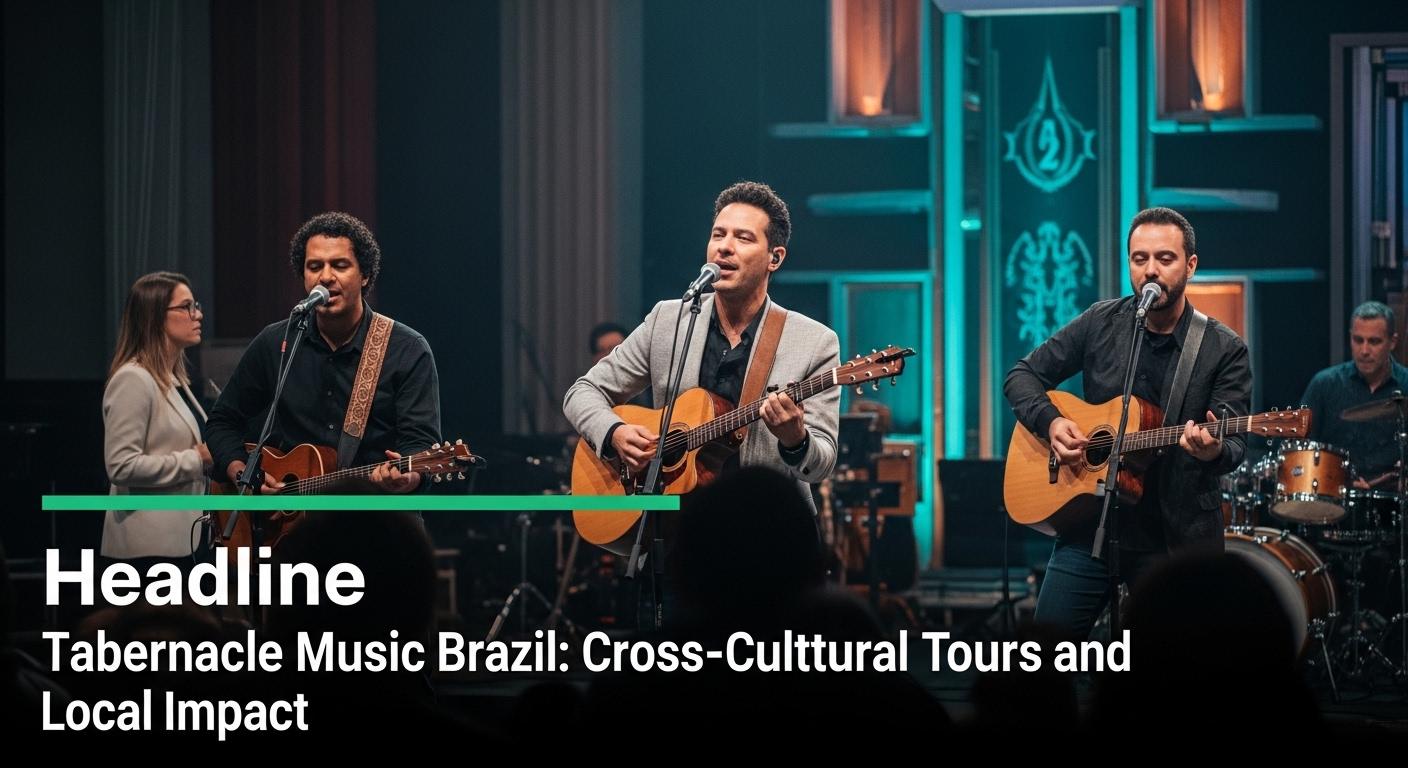
Choral ensemble performing in Brazil during an international concert tour
Updated: April 12, 2026
In Brazil’s sprawling music landscape, tabernacle Music Brazil stands as a case study in how international choirs navigate local tastes. The arrival of a touring choir and orchestra is not just a concert date; it is a test of translation—of repertoire, language, and the cultural codes that make live music meaningful in a Brazilian context. This moment invites a deeper analysis of what it means for a touring ensemble to perform in a country with its own long-standing choral and popular traditions.
Cultural Translation: Repertoire and Audience Expectations
Producers and artists increasingly frame programs as conversations rather than showcases. In Brazil, audiences bring expectations shaped by decades of samba, MPB, and a strong tradition of choral and religious choral singing. The challenge for tabernacle Music Brazil and its collaborators is to assemble a program that respects those roots while preserving the integrity of the source material. This often means bilingual program notes, a careful balance of reverent sacred pieces with uplifting secular numbers, and live arrangements that emphasize vocal blend, rhythm, and tempo that translate well to Brazilian halls. The dynamic of confluences—classical technique meeting popular-inflected rhythms—can unlock new audiences, but it requires a deliberate dramaturgy on stage: pacing, voice leading, and a sense of communal participation that aligns with Brazilian concert culture.
Language can be a barrier or a bridge. While many spectators attend expecting English-language choral textures, a practical approach is to provide concise summaries in Portuguese and to invite local choirs to participate in select pieces, creating a shared musical moment rather than a distant performance. Those choices reflect a broader trend in global touring: music travels best when it feels inclusive rather than exclusive.
Economic Realities of Touring in Brazil
Tour budgets for international ensembles sit at the intersection of artistic aspiration and logistical constraints. Even in markets with strong cultural infrastructure, exchange rates, travel costs, and venue fees shape what is possible. In Brazil, promoters increasingly look to sponsorships from cultural foundations and corporate partners that value soft power and cultural diplomacy, alongside ticket revenue. The balance matters: tiered pricing, student discounts, and public outreach programs can expand reach without eroding the financial model that enables large ensembles to tour.
Regional Brazilian markets differ significantly from capital cities. An approach that clusters main-city dates with regional workshops and masterclasses can maximize impact while distributing economic activity across multiple locales. This is not merely philanthropy; it is a pragmatic business model: audiences, schools, and local arts ecosystems benefit from exposure to high-caliber choral music, while the touring company builds goodwill that can translate into future commissions and collaborations.
Digital Reach and Local Partnerships
In a country where broadcast and streaming ecosystems are deeply intertwined with mobile access, the digital layer often determines a tour’s long tail. Live performances are complemented by social media storytelling, behind-the-scenes footage, and short multi-lingual clips that capture the texture of a performance without requiring a full translation. Partnerships with Brazilian radio programs, cultural centers, and educational institutions can amplify reach beyond the venue walls, turning a single stop into a multi-city conversation that persists after the final bow.
More than ever, the success of cross-border music projects hinges on local relationships: a Brazilian choir for collaborative pieces, a festival curator who can position a program within existing streams, and a translator or host who can guide audiences through nuanced program notes. By prioritizing accessibility—captioned videos, Portuguese summaries, and community engagement—the ensemble can build a sustainable digital footprint that serves both the touring company and the local music scenes.
Future Scenarios: Sustainability and Cultural Exchange
Looking ahead, a sustained model for cross-cultural touring would emphasize residency-style collaborations, ongoing mentorship with local choirs, and a repertoire that traverses sacred and secular idioms with sensitivity. The long-term payoff is architectural: a network of Brazilian institutions that see international ensembles as resource partners rather than distant guests. Such a framework can also spur new compositions by Brazilian and diaspora composers, creating living bridges between languages, harmonies, and rhythms that evolve over multiple seasons.
Policy environments matter too. Public investment in cultural exchange and regional arts networks can lower barriers to entry for international performances, enabling more ambitious programming and more diverse audiences. In return, the touring entity benefits from heightened local loyalty and enriched artistic outcomes, which feed back into the global reputation of tabernacle Music Brazil as a facilitator of meaningful musical dialogue rather than a one-off spectacle.
Actionable Takeaways
- Design repertoires with input from Brazilian mentors to balance authenticity and novelty.
- Pair large-scale concerts with community engagement, workshops, and school programs to deepen impact.
- Develop bilingual materials and provide accessibility options to maximize audience inclusion.
- Build local partnerships early, including venues, sponsors, and cultural organizations, to distribute resources and audiences.
- Plan a sustainable digital strategy with streaming, clips, and behind-the-scenes content that complements live performances.
Source Context
The following sources provide background on cross-cultural music exchanges and related coverage:
Actionable Takeaways
- Track official updates and trusted local reporting.
- Compare at least two independent sources before sharing claims.
- Review short-term risk, opportunity, and timing before acting.