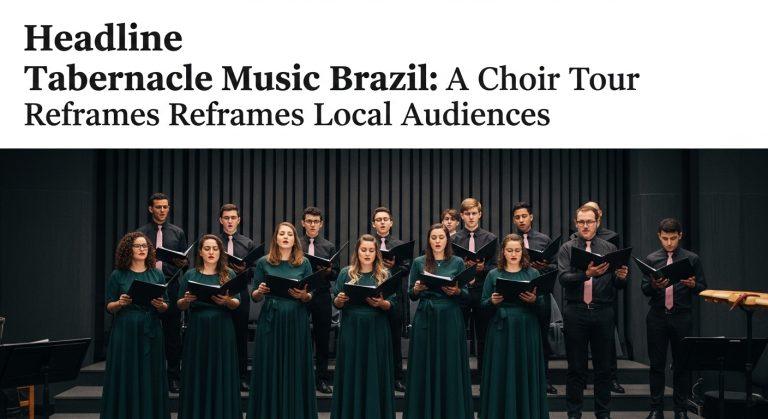
In a week Music Brazil, audiences are not merely listening; they are watching a dialogue unfold between traditional forms and global sound. Recent performances in São Paulo, including a high-profile stop by the Tabernacle Choir and Orchestra, illuminate how cross-genre programming can recalibrate Brazilian concert culture. The moment underscores Brazil’s evolving live-music ecosystem, where city-scale concerts function as laboratories for experimentation, audience research, and industry learning. This framing matters because it moves beyond a single show to a pattern: curated weeks of programming that assemble disparate repertoires under a common narrative arc, testing what Brazilian audiences want when sonic boundaries are softened, tempo is varied, and the stage becomes a meeting place for both reverence and novelty.
A week Music Brazil as a staging ground for cross-genre exchange
São Paulo has increasingly positioned itself as a strategic hub for hybrid programs that fuse orchestral craft with popular energy. The Tabernacle Choir and Orchestra’s São Paulo performances—framed as a multi-venue engagement—illustrate how global ensembles can lean into Brazilian sensibilities without diluting their own identity. In practical terms, venue operators and producers are recalibrating technical demands, from sound design to light shows, to accommodate diverse audiences and ensure that late-night attendance remains viable for families, students, and casual concertgoers alike. This approach is not merely aesthetic; it is logistical and economic. Hybrid programs tend to extend the city’s cultural calendar, spur ancillary events, and stimulate local suppliers—while also inviting new listeners who might not attend a traditional choir or classical concert on its own. For Brazil, this format tests how far audiences are willing to travel for cross-genre experiences and what kinds of programming sustain interest across a week-long arc rather than a single headline night.
Guest stars and audience dynamics in São Paulo
The inclusion of a high-profile guest—such as Ivete Sangalo as a surprise participant during the choir’s São Paulo concerts—offers a concrete case study in audience dynamics during a cross-genre week. In Brazilian concert culture, guest appearances carry significant momentum: they can expand demographics, blur genre boundaries, and invite listeners who might not otherwise engage with a choral-repertoire program. From a programming perspective, such moments test the tension between tradition and contemporaneity. They require careful pacing, rehearsal discipline, and clear communication with the audience about the intent of the collaboration. For organizers, the moment is instructive: it demonstrates how a well-placed crossover moment can lift attendance, extend media reach, and generate word-of-mouth that reverberates beyond the venue, into streaming numbers and social conversations. For performers, it offers a live feedback loop about audience receptivity to non-native pairings, potentially informing future collaborations and repertoire choices within Brazil’s crowded live music calendar.
Digital ecosystems, streaming, and the music economy
The week-long framing benefits from Brazil’s expanding digital ecosystem. Streaming platforms, social media engagement, and real-time broadcast coverage amplify a single week into a nationwide conversation, creating a layered impact on the music economy. Producers now routinely measure success not just by ticket sales but by cross-channel resonance: curated clips, fan discussions, and curated playlists that keep the music alive long after the live event ends. This dynamic makes cross-genre weeks more scalable: a handful of flagship concerts can seed smaller club dates, festival programming, and educational outreach, while data on listener behavior informs future touring plans. The orchestration of a week like this also pressures touring teams to balance international prestige with local relevance—adapting tempos, language cues, and audience interaction to fit Brazilian listening habits and social rhythms. In short, digital ecosystems are not optional advertising machinery; they are integral to the lifecycle and financial viability of hybrid concert formats in Brazil.
Actionable Takeaways
- Prioritize cross-genre programming as a deliberate strategy to expand audiences and extend the cultural calendar in major cities like São Paulo.
- Design guest collaborations that respect repertoire origins while offering accessible, memorable moments for diverse crowds.
- Leverage streaming and social media analytics to optimize set lists, pacing, and post-show engagement across multiple platforms.
- Coordinate with local partners—venues, media, and education programs—to create a sustainable ecosystem around week-long events.
- Develop clear communication around the artistic intent of hybrid programs to maximize audience trust and attendance across age groups.